

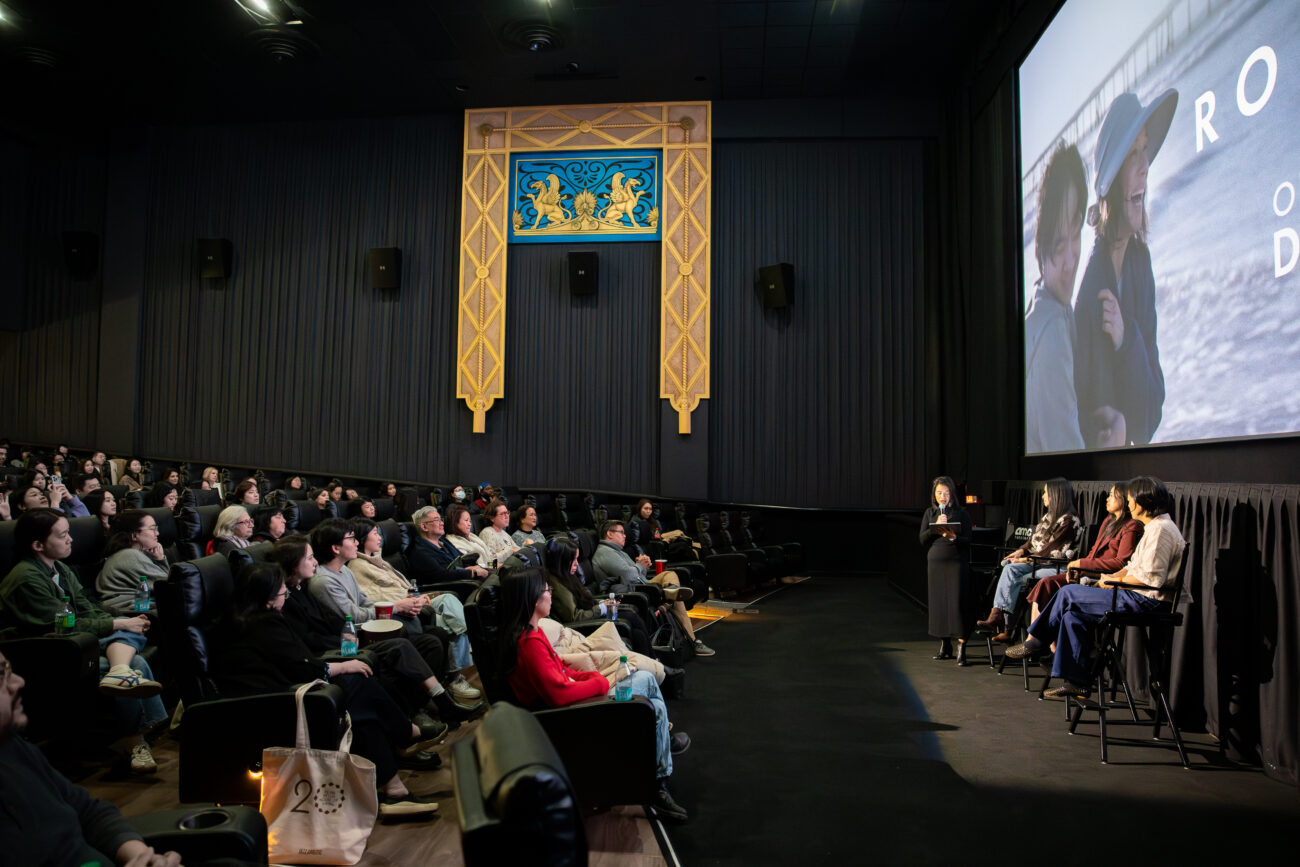
With Rosemead now officially released, Apex for Youth hosted a screening and panel discussion that brought together youth, families, and advocates to reflect on the film’s themes and the very real mental health challenges faced by Asian American communities. The event emphasized the importance of opening up conversations around intergenerational trauma, cultural pressures, and healing.
Rosemead, one of 2025’s most essential and unflinching films, is the feature directorial debut of Eric Lin, written by Marilyn Fu and inspired by a true, heartbreaking story from just ten years ago. Following Irene, a terminally ill immigrant mother, and her teenage son, Joe, the film confronts the unseen pressures, silence, and emotional isolation that shape so many Asian American family experiences.
“The movie was made so that it could spark conversation within our families, within our friends. When you think something is going on, don’t be afraid to ask, don’t judge somebody because you don’t know what your struggles are, even if it seems like everything is great.” – Lucy Liu
During the post-screening discussion, Lucy Liu shared how embodying Irene opened up deeper conversations about communication breakdowns within immigrant households. Yaya Yuan, our Director of Programs, along with Jennifer Wu, a trial and appellate lawyer advocating for Asian American victims of violence, spoke to how the film mirrors the lived realities of the young people and families we serve.
As Lucy noted, “In the movie itself, there is togetherness, but there’s no communication.” This dislocation, often complicated by language barriers and cultural gaps, is what ultimately leads Irene and Joe to a tragic end.
As Rosemead reaches wider audiences, it stands not just as a cinematic achievement but as a catalyst urging communities to talk openly about mental health, trauma, and healing.

Masking the Struggle
At Apex for Youth, we work with Asian American youth from low-income and immigrant backgrounds in New York City, cultivating the transformative relationships and resources they need to thrive. For years, we’ve seen how cultural expectations create an intense pressure cooker environment.
Yaya discusses Joe’s struggle, highlighting a familiar pattern: the masking of pain.
“The moments where he masks the struggle… and you see him kind of settle into this. ‘No. I’m fine.’… And then the moment where he runs out of the classroom and he’s in a kind of having a breakdown in a sort of crisis, and he also just composes himself and moves on to the day.”
We started our mental health services in 2021, spurred by the isolation of COVID and the spike in anti-Asian violence. While these external factors were real, our work confirmed that the deepest struggles were perennial: the crushing family pressure to succeed – to achieve A’s, get into good schools, and “make it in this country” has always been there, just below the surface. Our youth are incredibly good at hiding the emotional toll of carrying their parents’ dreams and the trauma of their immigrant experience.
The film illuminates a critical barrier in seeking help. Irene, in a moment of frustration, tells a therapist, “You have a Chinese face, but you don’t understand us.”
This quote underscores why culturally-attuned and in-language services are non-negotiable. At Apex, we prioritize therapists who not only are trained professionals but also share the cultural backgrounds and experiences of our youth and their families. This shared understanding is the spark that opens the door to honest conversation, ensuring that we’re not just speaking the same words, but the same emotional language.
Unraveling Intergenerational Trauma and Silence
Silence is a survival mechanism. For many immigrant parents, silence is a form of protection, a belief that “if you speak out, you might be attacked or you might… exist in the corners of society.”
Jennifer recounted experiences with anti-Asian hate crime victims who were consistently late to their law firm meetings, not because of disrespect, but because they simply did not believe their time or their case was important enough to be prioritized. This profound sense of marginalization and fear can be passed down:
“I think that’s a true story, right? Like, you know, like you you don’t know. My parents were just afraid. They were afraid they would get in trouble… that culture of violence and shame and saving face turns out to, like, affect you later in life.”
The Call for Compassion and Healing
Rosemead forces us to look beyond judgment and find compassion for Irene, the mother. Her final, devastating action was not callous, but born of a desperate, sequestered love and fear. She was struggling with her own health, felt completely isolated, and had no one advocating for her, leading her to create her own fatal narrative.
The path to healing, as discussed by the panel, requires courageous, intergenerational conversations.
- Acknowledge the Trauma: Healing begins with acknowledging intergenerational trauma – the deep, hard work of recognizing how we have been hurt and how we, in turn, may hurt those we love.
- Open the Door: Progress is about community. It’s about physically and emotionally “opening the door”, turning to the person next to you and asking “How are you?” and truly listening, without rushing for a quick fix.
- Embrace Receiving: For immigrant families, giving is often easier than receiving, whether it’s a compliment, help, or a moment of stillness. Healing involves softening our resistance and learning to accept the support and compassion offered to us.
Rosemead is more than a movie; it’s a necessary conversation starter. It’s a call to action for every member of our community to show up, break the silence, and foster the connection that turns individual struggle into collective healing.
Thank you to Lucy Liu, Yaya Yuan, Jennifer Wu, Gil Liu, Melody Lee, Ray Chan, and our incredible Apex board for making this screening possible.


 English
  Chinese
  Korean
  Bengali
  Vietnamese
  Spanish
  Tagalog
  Hindi
Hindi